

Insights & Resources
Practical perspectives on building AI systems that work in production. Strategy, implementation patterns, and lessons from real deployments.
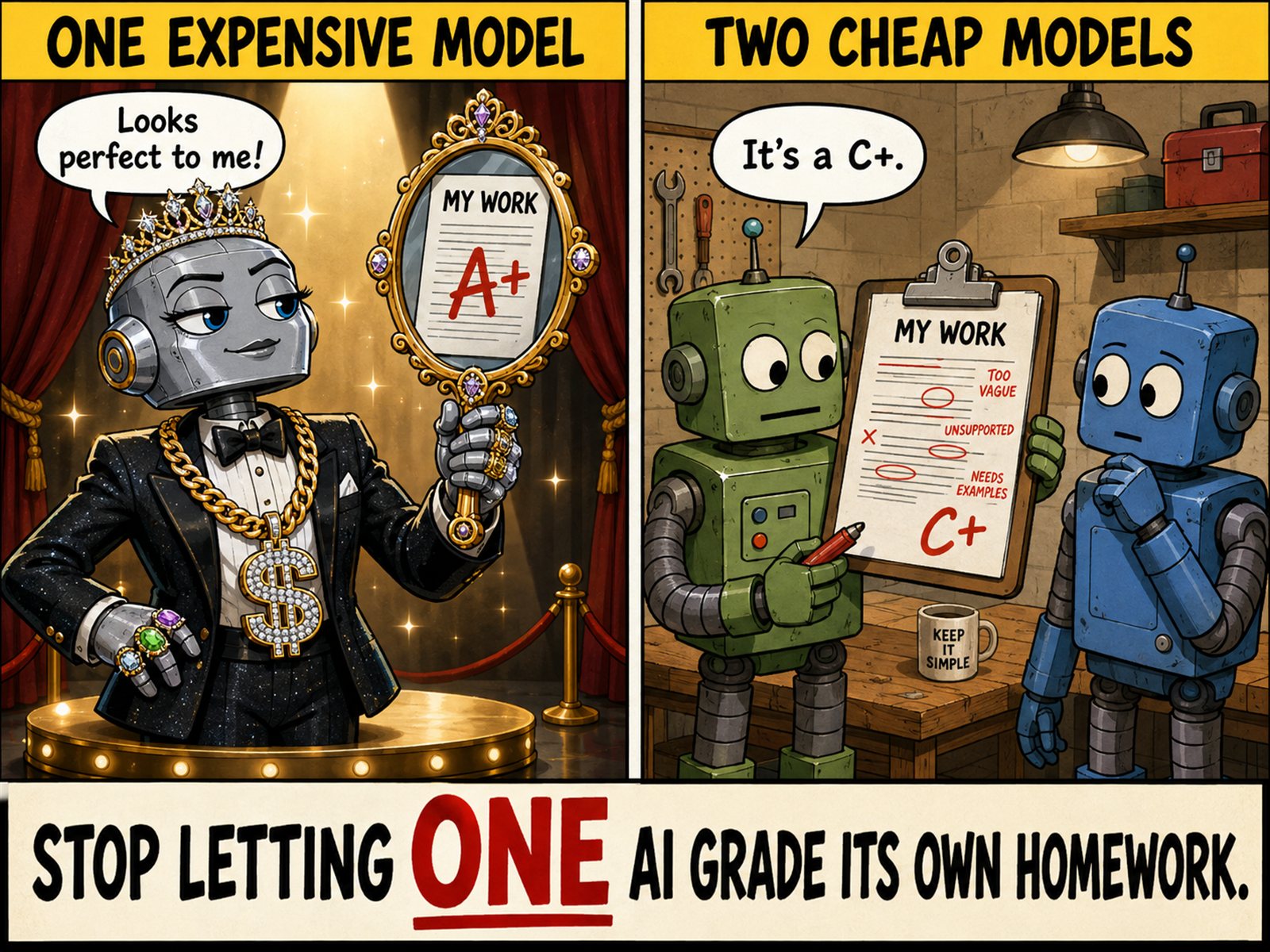
Two Cheap Models Beat One Expensive One
The flagship model costs ten times more than the tier that nearly matches it, and the fear that keeps you paying is fixable with architecture: a cheap second model, from a different lab, checking the work with fresh eyes and no idea who wrote it.
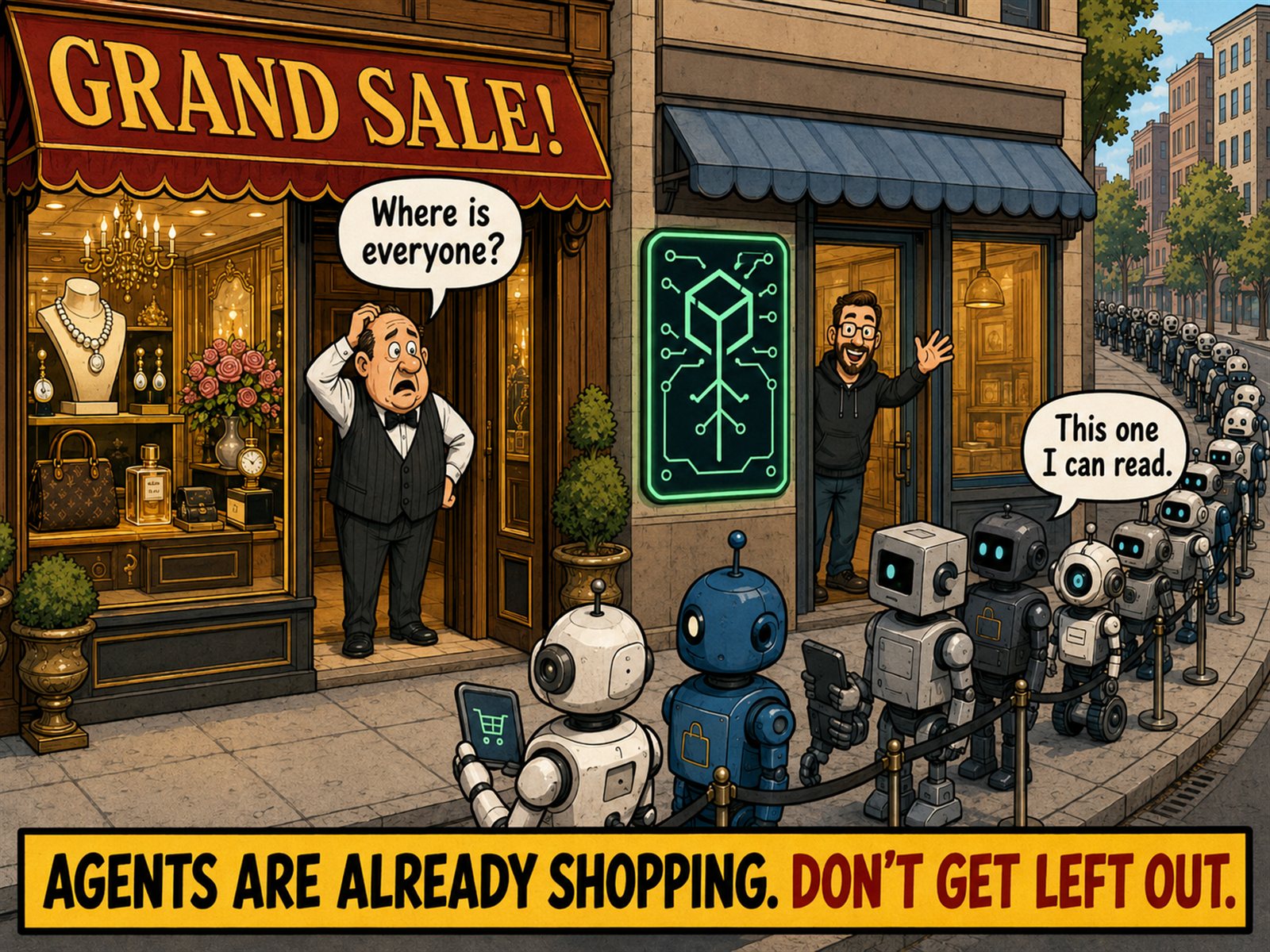
Your Next Customer Is an Agent
More than half of web traffic is now automated, and AI-referred shoppers convert a third better than everyone else. The buyer walking past your beautiful storefront is software working for a human, and it reads a different sign.
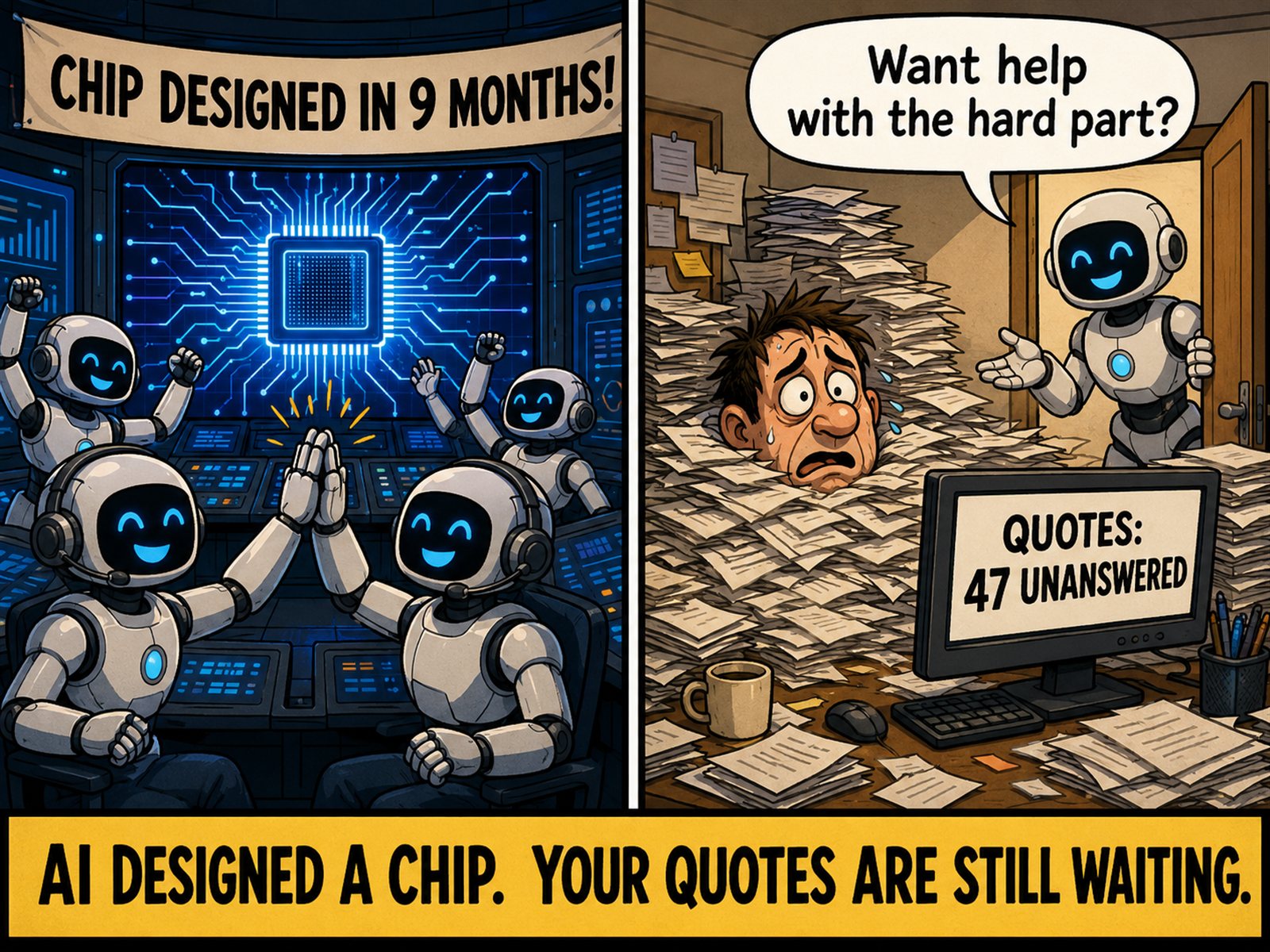
If AI Can Help Design a Chip, It Can Fix Your Quoting Inbox
The most complex supply chain on earth just had its design work absorbed by AI agents. The ordinary chains, quoting, order entry, scheduling, follow-up, are far simpler targets, and the companies that run on email are already proving it.
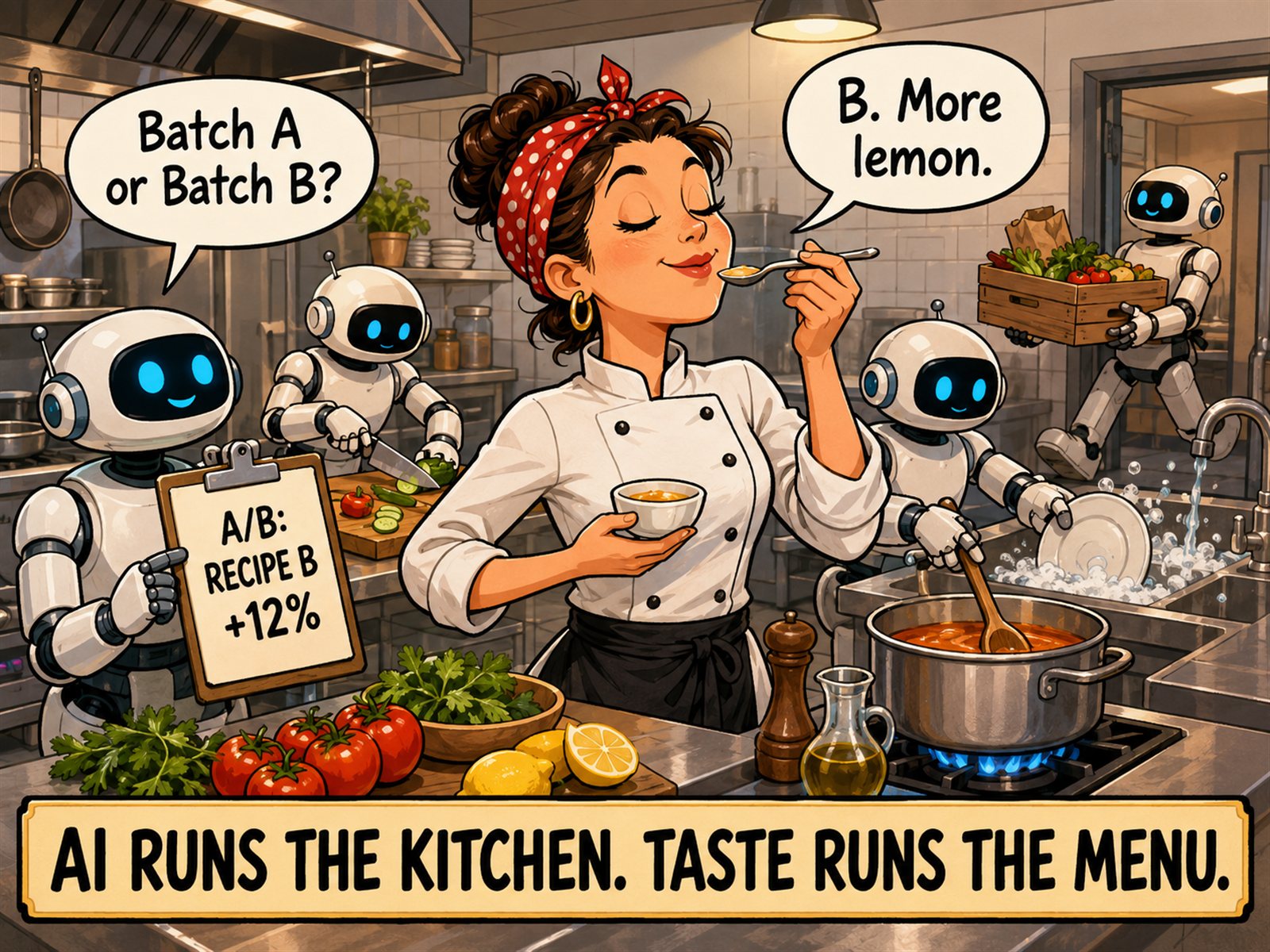
When Drafts Are Free, Judgment Is the Job
Inside the AGI headlines from OpenAI is a quieter, checkable story: expert work is being automated from the top down, your insurance already has an opinion about it, and the judgment of your most senior people is the asset to secure now.
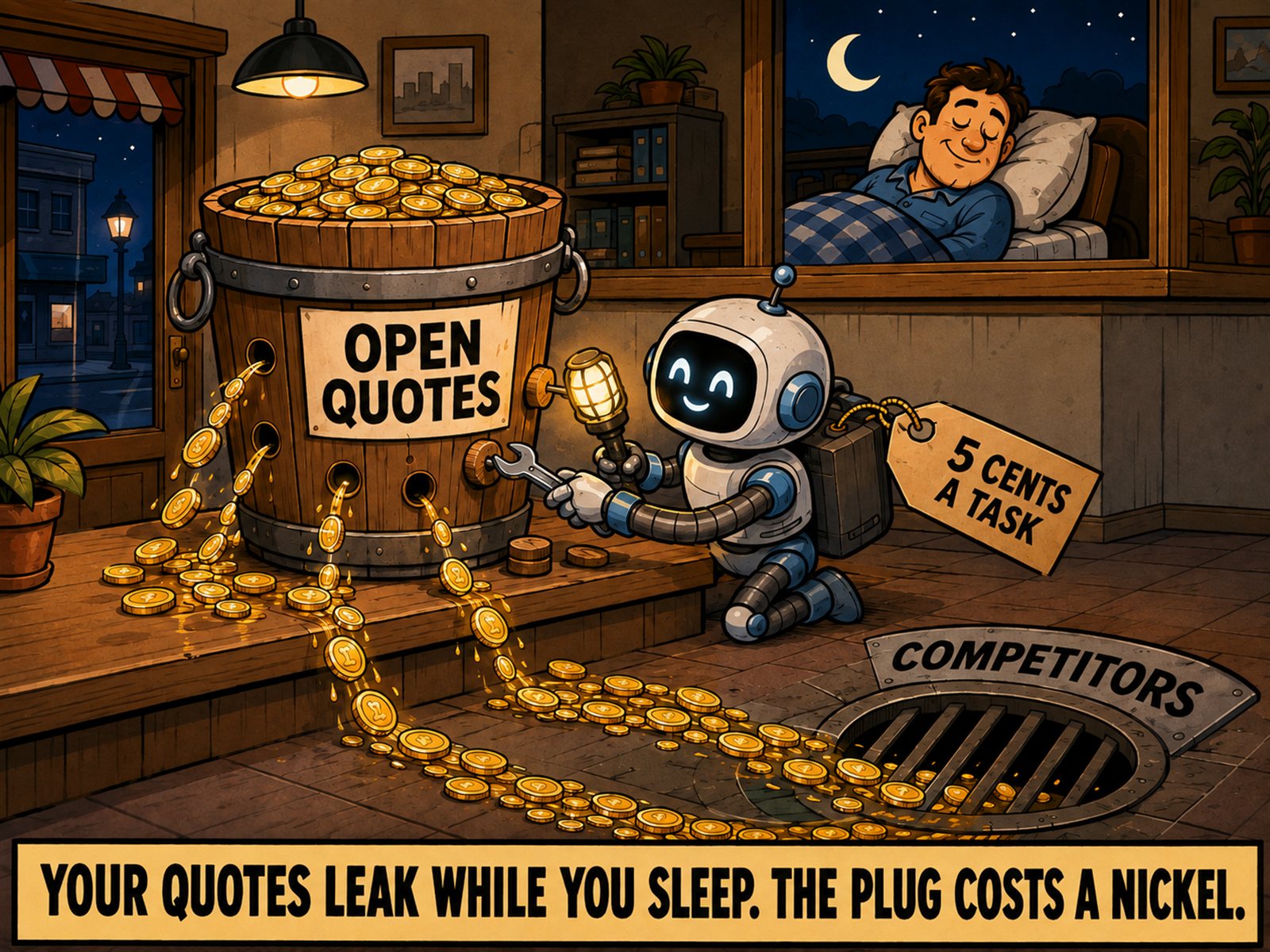
A Nickel a Task: The Overnight Shift a 15-Person Company Can Afford Now
Frontier-grade AI now wholesales at about five cents a task. Here is the honest math on what an overnight agent shift costs all-in, what companies like yours are getting back, and the question that catches a bad vendor.
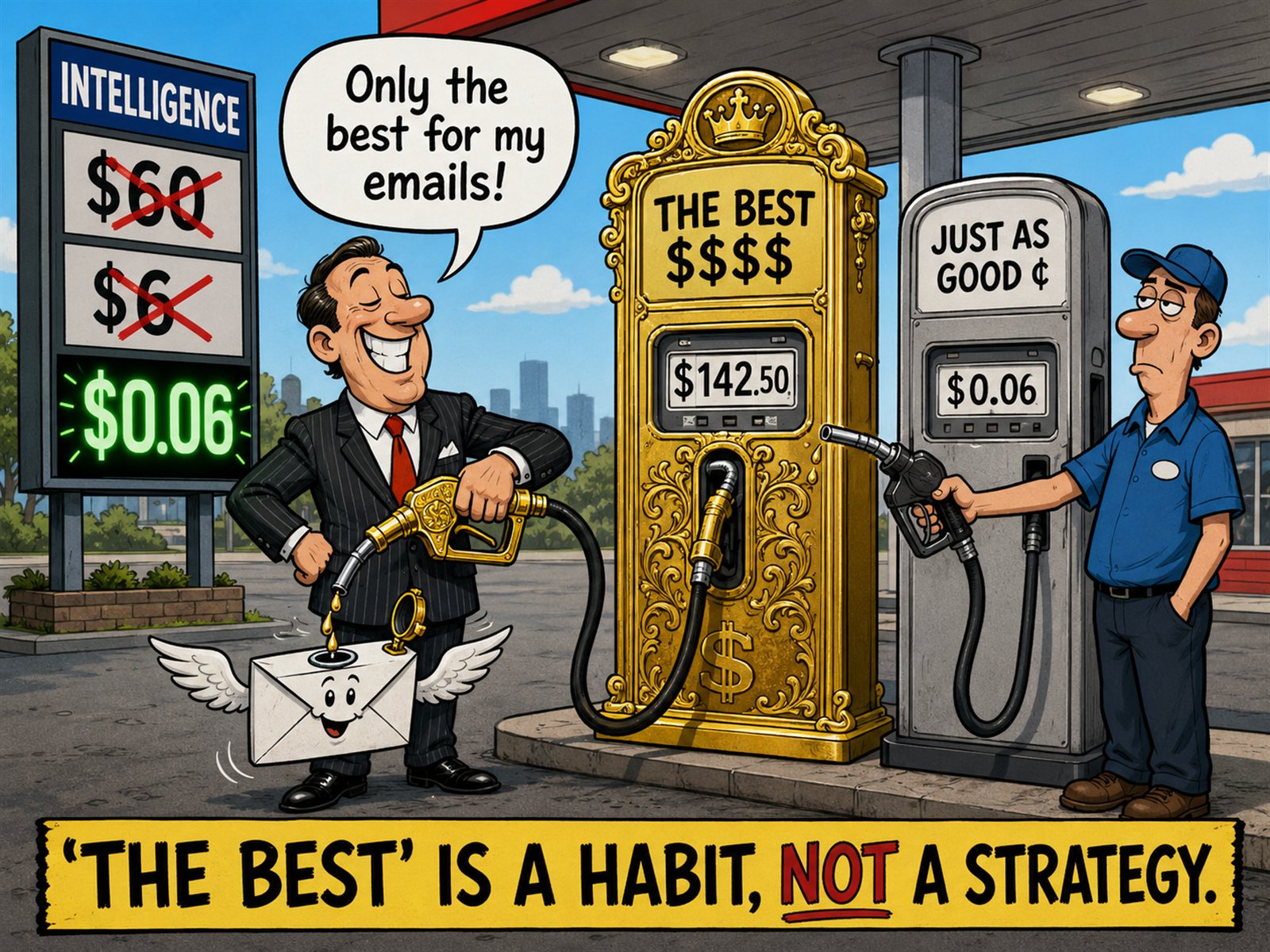
Intelligence Is Deflating 10x a Year. Your AI Contract Doesn't Know Yet.
A chip designed in nine months, chip software written by the models themselves, and a price curve falling faster than any vendor roadmap. Here is what last week’s chip news means for the next AI contract you sign, with real clause language.
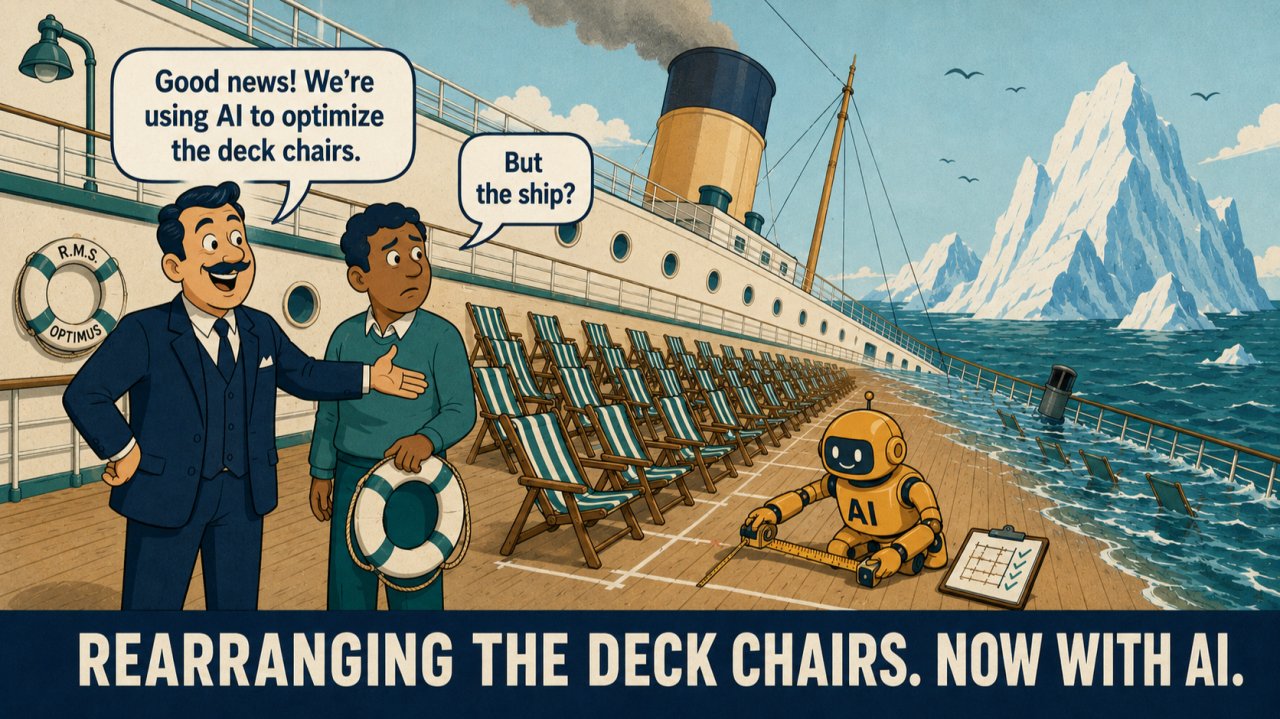
Worried AI Will Take Your Job? You're Watching the Wrong Threat.
A role has never been a fixed list of tasks — it is the value you add to what others pay for. The change underway is structural, and your position depends on understanding it.
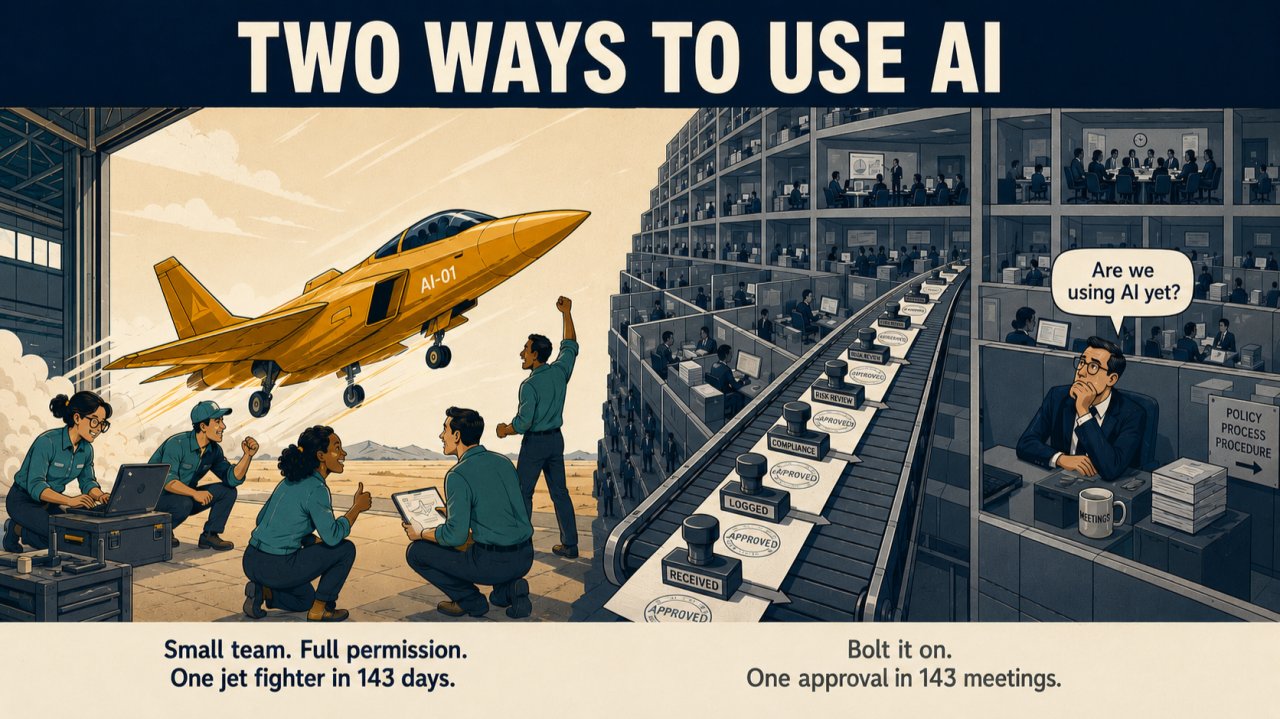
Stop Asking Your People to "Just Use AI"
Most AI investments deliver modest returns. The reason is structural, and so is the fix: small teams that own a whole outcome end to end, not individuals told to use AI more.
Agentic Commerce: How ACP and UCP Are Reshaping Business
The Agentic Commerce Protocol and Universal Commerce Protocol are creating a new layer of machine-to-machine commerce. Here is what business leaders need to understand about the protocol landscape reshaping enterprise transactions.
WebMCP: Making Your Website Agent-Native
A technical guide to implementing the Model Context Protocol on your website, turning your digital presence into a platform that AI agents can discover, authenticate with, and interact with programmatically.
Building Agentic Systems That Amplify Teams
Our thesis on agentic system design: the best AI systems do not replace human judgment but multiply it. How we approach architecture, orchestration, and the human-machine boundary.
The Agent-Native Enterprise: A Practical Roadmap
A step-by-step guide for enterprise leaders ready to make their organization discoverable, interactable, and transactable by AI agents. From assessment to implementation to optimization.

Feed Your AI Agent: Structuring Product Data for Conversational Commerce
The shift from SEO to Answer Engine Optimization requires restructuring how brands present product data. Your product data is no longer just feeding a catalog—it's training the AI that will represent your products.
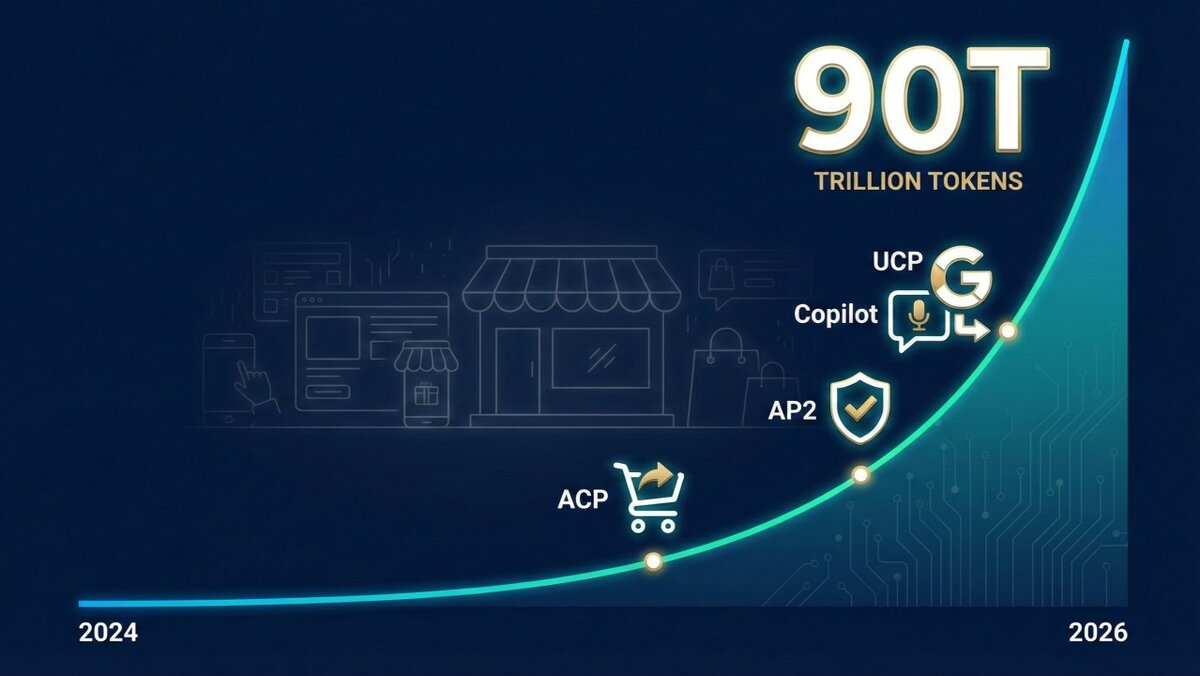
The 90 Trillion Token Signal: What Retail Leadership Needs to Prioritize Now
Google processed 90 trillion tokens for retailers in December 2025—an 11x increase from a year prior. This represents one of the fastest adoption curves in retail technology history.
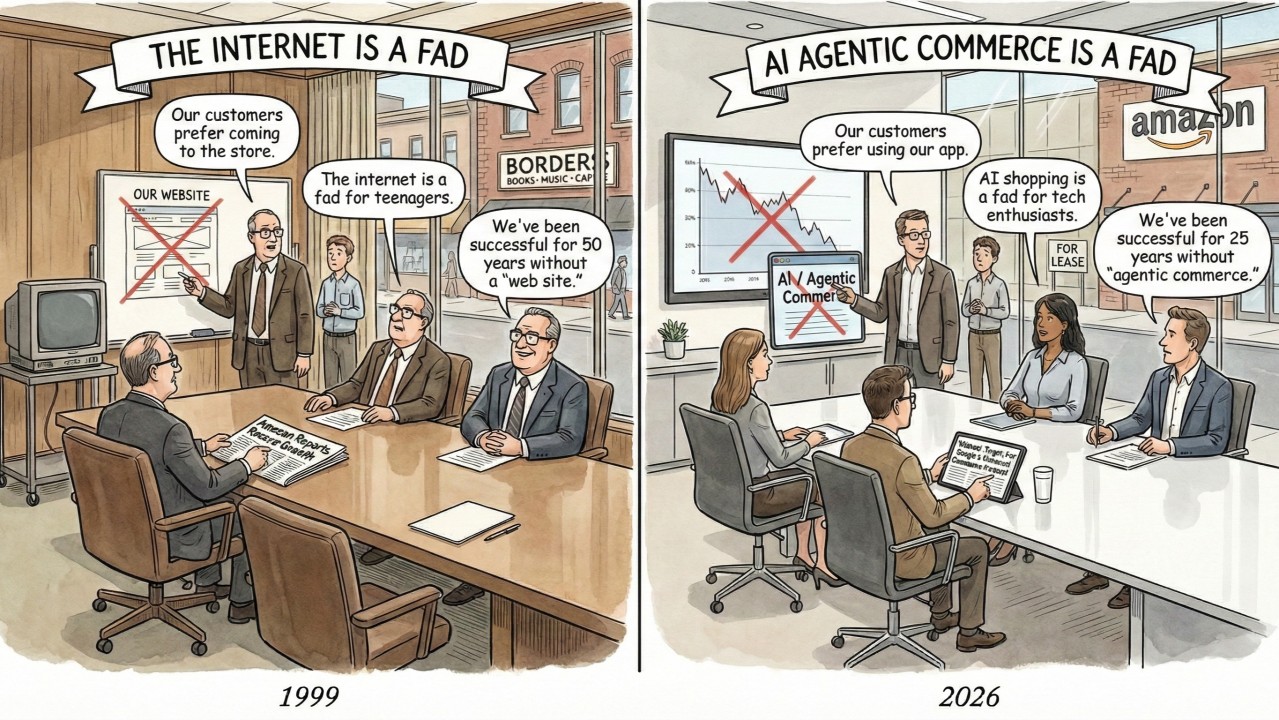
Agentic Commerce Is Here. Is Your Brand Ready?
Google's Universal Commerce Protocol moved agentic commerce from keynote to production — with Walmart, Shopify, Target, and 60+ companies onboard. Here is what brand leaders need to do now.
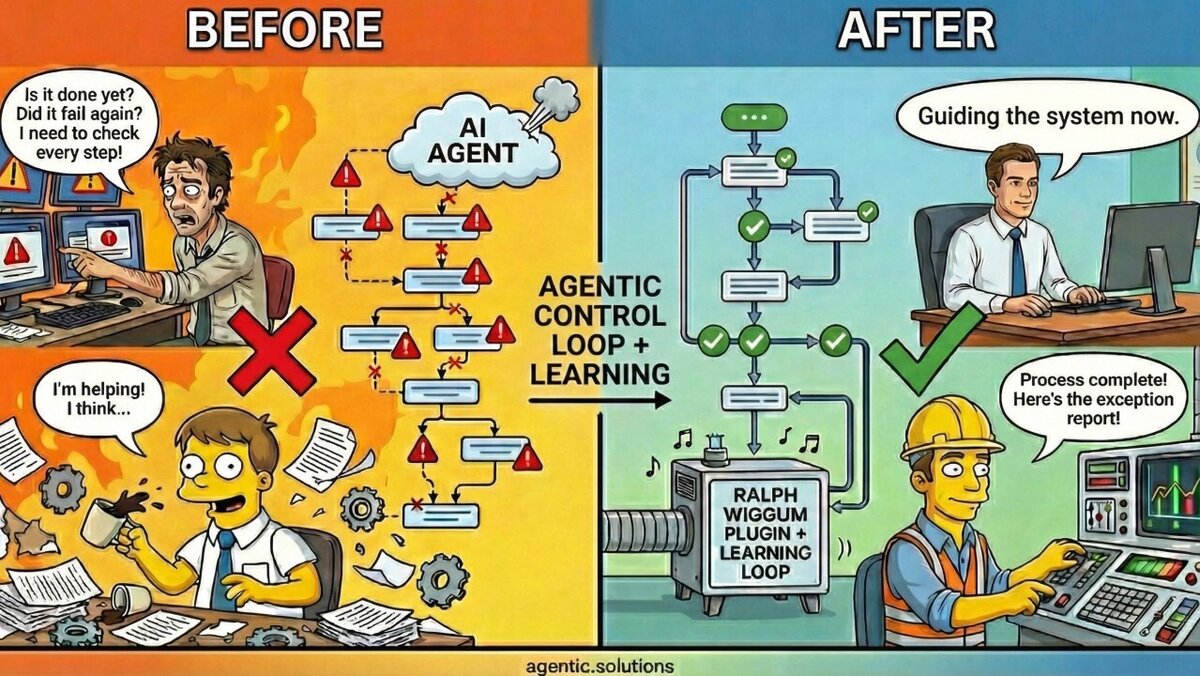
The Ralph Wiggum Problem: Why Agents Quit Early and How to Fix It
Intelligence doesn't guarantee completion. You can have the smartest model available, and it will still stop prematurely. The Ralph Wiggum pattern fixes this with systematic completion and learning loops.

Stop the Mega-Model Tax: Continuous LLM Evals, Agentic Routing & Real-Cash Savings
Companies waste money by hard-coding a single large language model for all tasks. Continuous evaluation and agentic routing can cut costs by 90%+ on routine operations.

The AI Blitzkrieg: How History's Hard Lessons Can Help You Lead Revolutionary Change
The playbook that got us here might be the very thing that prevents us from seizing what's next. Most organizations are treating AI like the French treated their superior tanks—as tools to make existing processes marginally better.
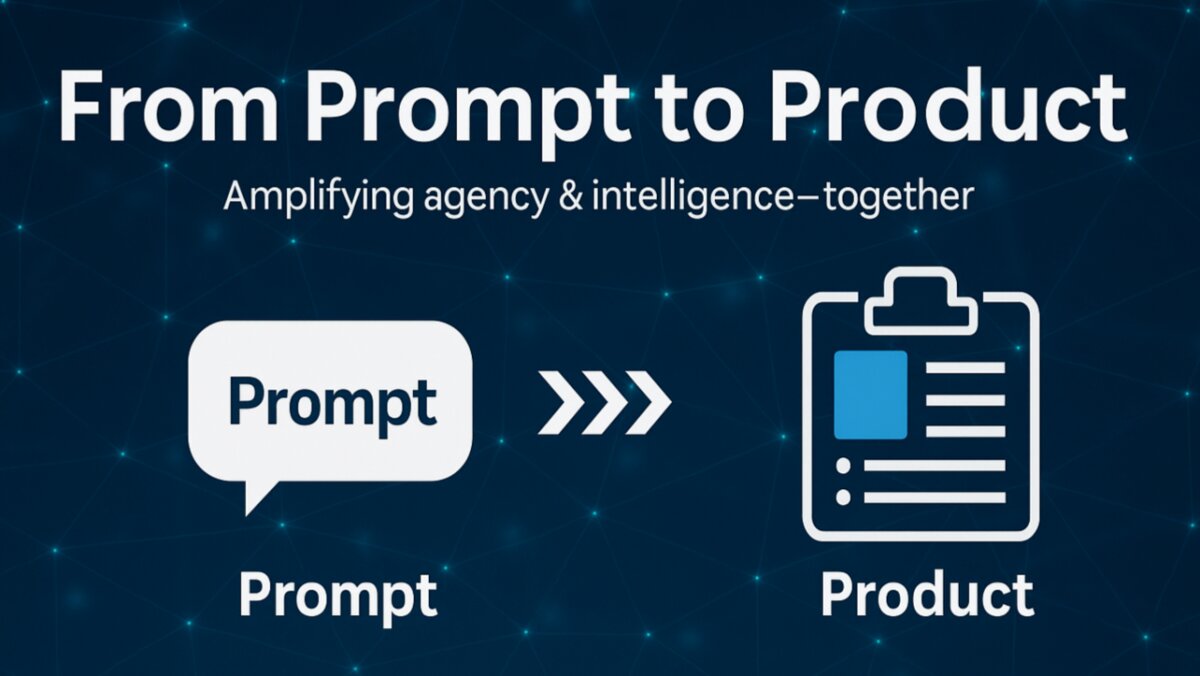
One Sentence Can Now Ship a Product—But Only If You Understand the Space
Large-language models operate within mathematical "latent spaces" where prompts function as navigation pathways. Understanding this changes everything about how you use AI.
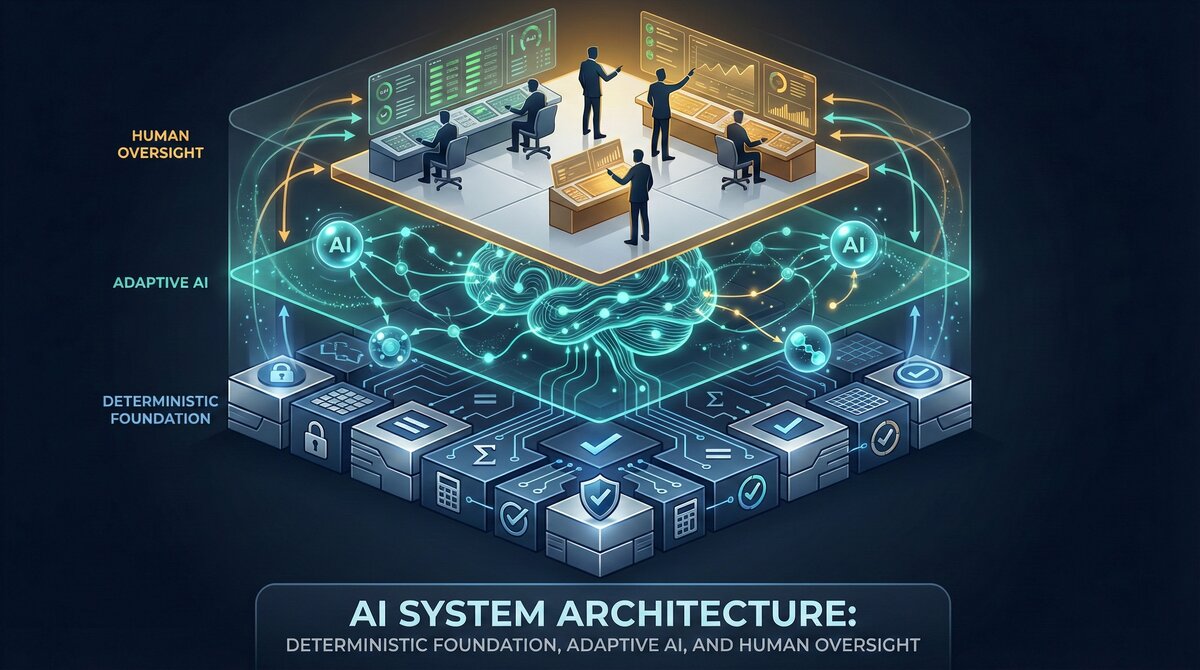
The Three-Layer Architecture: Building AI That Actually Works
Why hybrid systems outperform pure AI solutions, and how to design architectures that combine deterministic reliability with adaptive intelligence.